
(Hazrat Maulana Syed Shah Ghulam Hasnain Chishti Nadvi Phulwari)
Phulwari Sharif is a famous Muslim settlement in the Patna district of Bihar. It is adjacent to Patliputra, the capital of the great kingdom of Magadha, and is located seven to eight miles west of Kamrar, where the palaces of the Maurya Empire were located. In the ancient traditions here, written by the great Sufi saints, it is mentioned that there was a beautiful garden of Emperor Ashoka at this place, which was left in ruins by the passage of time like Kamrar. Some thousand years ago, the Sarawak, that is, the Jain ascetics established their settlement here and they called this place “Raja’s Phulwari”. This tradition shows that one thousand years ago, the word Phulwari was used in the local dialect of the language to mean “garden”. And this is the reason why this settlement was named.
Some of the ancient shrines here, which are related to the companions of Makhdoom Yahya Maneri (690 AH), indicate that these Sarawak ascetics had established contacts with the Muslim poor living in Maner. But the permanent Islamic settlement began during the reign of Feroz Tughlaq, while in 762 AH, i.e. six hundred and twenty years ago, Makhdoom Minhajuddin Rasta Gilani, a caliph of Makhdoom-ul-Mulk Sheikh Sharafuddin Bihari, settled here permanently with his companions and relatives. He gained extraordinary respect among the local population here and the number of Muslims increased. After Hazrat, a series of pilgrimages continued in his Khanqah. He achieved great success during the Mughal era. He was granted jagirs, qazas and positions. It is clearly stated in the royal decrees that Makhdoom Rasta was the caliph of Makhdoom Sharafuddin.
In recent times, a prominent member of this family, Mr. Syed Abdul Aziz Barrister at Law, the late Minister of Education of Bihar Province and President of the Hyderabad Deccan, has become very famous.
During the Mughal Empire, “Raja Ki Phulwari” had become Pargana Phulwari. A survey of this settlement has been given in the Ain-e-Akbari. The areas of cultivated and uncultivated inhabited lands have been given and it is written that Sheikhs, Mughals and Rajputs lived here.
To suppress the Pathans, the Mughals had established numerous settlements of Sheikhs, Mughals and Rajputs from Rohtas to Rajgir. Now there are old Sheikhs in Phulwari but there are no Mughals and Rajputs. Abul Fazal has not mentioned the Sarawaks. Probably their number has decreased a lot. During my childhood, that is, until about fifty years ago, there was a Jain temple in a very dilapidated condition and there was also a Mahantji. But time has passed and neither that temple nor any of the workers remain.
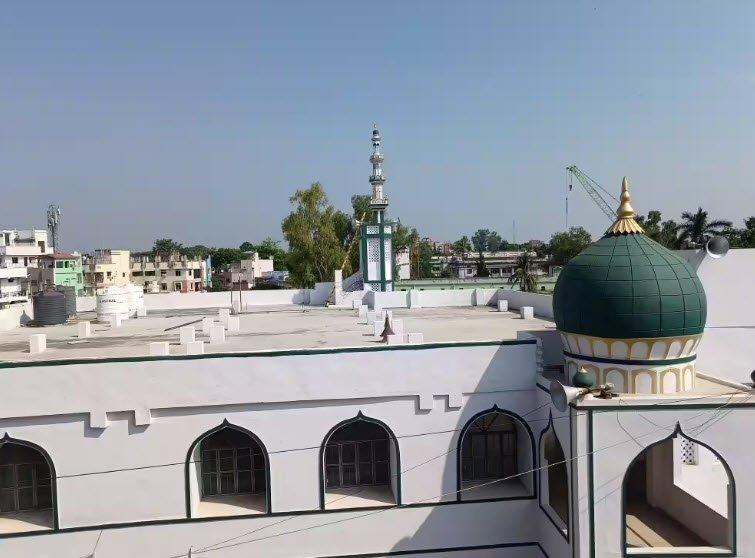
Some 150 years after the death of Hazrat Makhdoom Rasti in 787 AH, another very respectable family came to Phulwari from Delhi under the leadership of Khwaja Amir Attaullah Zainabi Jafri. He migrated from Delhi due to family feuds regarding the Sajjada of the Khanqah of the great Hazrat Nooruddin Malik Yar Puran. The landlord of Pargana Phulwari, who was a disciple of this family invited him to settle in Phulwari and provided him with his daily needs. At that time, the reign of Sher Shah Suri had begun in Sasaram where many relatives of Amir Ataullah were appointed to high positions. Amir Ataullah was appointed to high positions through his mediation. Due to his high abilities, he had a great influence on the affairs of the empire during the reign of Salim Shah Suri, the son of Sher Shah Suri. But after the death of Salim Shah, his young son Feroz was killed by his uncle Mubariz Khan and seized the empire. Amir Attaullah distanced himself from him and joined Humayun in Lahore, who had conquered Kabul and was marching towards Delhi while ravaging India. Humayun considered him a prize and appreciated him greatly. As is the case in old traditions, he included him among his ministers. This is confirmed by an old album from the Khuda Bakhsh Oriental Library, which contains handwritten portraits of the Mughal kings and princes. Below one of the murals, there is an inscription in Persian that this mural belongs to Amir Ataullah, who was Humayun’s minister and whose tomb is in the town of Phulwari. Also, in the handwritten manuscript of Akbarnama of Abulfazl, the name of Khwaja Attaullah is also mentioned at one place in Lahore among Akbar’s companions. This second ascension of Humayun to the throne of Delhi was very sudden and lasted only six months, so it is difficult to find a complete list of the emirs of this court. After the death of Humayun in 963 AH, Amir Ataullah took leave of the court of Akbar and came to Phulwari and died the next year in 964 AH. In 956 AH, while he was in the court of Sultan Salim Shah Suri, Khwaja Amir Ataullah built a solid and beautiful mosque of red stone, the carved stones, carved pillars and mehrabs of which were all brought here from Agra by boats across the Ganges and Yamuna. This monument of the royal time is still very beautiful and inhabited. The English tourist Dr. Battingen has also mentioned this mosque and the ancient madrasa attached to it in wonderful words in his travelogue of 1811-12.
Adjacent to the southern wall of this mosque are the shrines of Hazrat Amir Ataullah and his two sons Amir Muzaffar and Amir Muhammad Hussain, as well as the shrines of great scholars, sheikhs and officials of this family, including the shrine of Mullah Fasihuddin (RA), who was among the compliers of Fatawa Alamgir. In his honor, Emperor Aurangzeb, through a royal decree, appointed him a jagirdar and a minister to support his livelihood. Among the sons and daughters of Hazrat Amir Ataullah, numerous scholars, nobles, pious people, Sufis, writers, teachers, preachers, poets, writers, and scholars, as well as judges and officials, were born, whose virtues, perfections and achievements contributed to the greatness and fame of this settlement. In this family, there were many famous people like Tapan, Shoorsh and Fard.
Poets of the world Maulana Ahmadi, Maulana Zahoor-ul-Haq, Scholars and hadith scholars like Maulana Abdul Ghani were born. In Bihar, the first writer of Urdu prose and a poet who preceded the Deccan saint, Hazrat Imaduddin Qalandar (d. 1124 AH), was born here, from whom the Khanqah of Imadiyah was established. Among them was Taj-ul-Arifeen Shah Mujibullah (d. 1191 AH), who established the famous Khanqah-e-Mujibiyah.
In the last period, Hazrat Maulana Shah Muhammad Sulaiman (d. 1354 AH) was the first person among the old-fashioned orthodox Ulema and Sufis of India to support Sir Syed Ahmad’s educational movement. As a member of his Educational Conference, he remained a shield for Sir Syed and his comrades against the fatwas of the conservative clerics. He also played an important role in organizing enlightened Ulema and establishing the Nadwatul Ulema Foundation in 1311 AH and Darul Uloom Nadwa Lucknow making them popular.
In the same period, Hazrat Maulana Shah Muhammad Badruddin (d. 1354 AH) passed away from Khanqah Mujibiya, whose spiritual lineage and influence spread to every corner of Bihar province. The Jamiat Ulema of Bihar established a religious organization called Emirate of Sharia. On the advice of Maulana Abul Kalam Azad, he was elected as the Ameer Shariat, that is, the head of this organization.
When Gandhiji launched the Turkish Mawalat movement in 1920, he visited these two elders. Both the elders and all the scholars and mashaikhs of Phulwari unanimously supported this movement and played their part in the path of freedom.
Maulana Abul Muhaasin Muhammad Sajjad, who was the original founder of the Emirate of Sharia Movement, left his homeland and settled in Phulwari Sharif and was buried here in the holy soil. The late Shah Uzair Manami also belonged to the family of Amir Ataullah, who was a member of the Bihar cabinet for nine years due to his national services. By the grace of God, Phulwari is still the center of scholars, mashaikhs and servants of the nation.
Courtesy of All India Radio Patna
(Hazrat Maulana Syed Shah Ghulam Hasnain Chishti Nadvi Phulwari)


Leave a Reply