
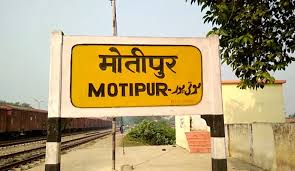
Naz Qadri Muzaffarpuri (1940–2019) ‘Professor Mohiuddin’ belonged to Baruraj, a Nagar Panchayat near Motipur Development Block. This is legislative constituency as well. A prominent poet, literary critic, fiction writer and beloved professor, he has contributed enormously to Urdu language and literature bringing name and fame to his state and region Mithila (Tirhut).
As an Educator, Naz Qadri has not only illuminated countless students with knowledge and literary appreciation but also achieved remarkable feats in the fields of fiction, poetry, criticism, and research. He has devoted a significant portion of his life to promoting Urdu culture and civilization. Counted among the significant poets of modernist tone and style, his ghazal poetry stands out among contemporary poets for its intellectual depth, semantic reach, emotional impact, simplicity, charm, and philosophical resonance. However, one wonders how far his harmonious temperament, breadth of thought, scholarly mastery, contemporary sensibility, and innate emotional fervor would have taken him in the realm of poetic excellence had he maintained a consistent connection with ghazal poetry? In fact, Naz Qadri is a unique artist whose creative restlessness has kept him unsettled from the beginning. He started with fiction and criticism, surprising the Urdu world in the 1970s as a promising young storyteller. Expectations arose that a great fiction writer was emerging, but after a short journey, he bid farewell to fiction. Nevertheless, he maintained a steady connection with criticism and research, showcasing his vast study, discerning insight, and impartial literary judgment.
Naz Sahab turned from fiction to crafting the locks and tresses of ghazal poetry. His practice and dedication to the art were on the verge of reaching the zenith of fame when his fortunate destiny led him to the radiant valley where the divine light of monotheism and prophethood illuminates the heart and soul. Love for the Prophet Muhammad (P.B.U.H), the embodiment of divine mercy, transcends all worldly desires. He became so devoted to the love of God’s beloved and the tradition of Hassani poetry that pearls and gems of Naat (praise of the Prophet) and Madh-e-Rasool (eulogies of the Prophet, P.B.U.H) began to flow from his mind and speech. In the realm of naat poetry, comparisons among poets or judgments of superiority are not made, as naat can only be composed by those granted divine favor. The son of Baruraj emerged as a prominent naat poet of his era.
The spiritual and radiant destination that Naz Sahib’s creativity and scholarship yearned for was fulfilled through naat poetry. His beautiful collections, ‘Chiragh-e-Hira’ (2008) and ‘Salsabeel-e-Noor’ (2015), are sacred anthologies of mystical poetry born from his heart in praise of the Prophet Muhammad (P.B.U.H). These works have been widely appreciated by scholars and critics both in India and abroad. Here, I suffice with the valuable opinion of Ameer-e-Shariat Bihar and Faqih-e-Azam Holland, Hazrat Allama Mufti Abdul Wajid Nayyar Qadri (May his blessings endure), regarding the first naat collection, ‘Chiragh-e-Hira’, as noted on the book’s back cover.
Following family traditions, he received early religious education and memorized the Quran before enrolling in a local school for modern education, where he excelled in his matriculation exams. Later, he joined Langat Singh College, Muzaffarpur, for higher education, where he benefited from the teachings and companionship of devout Sunni scholars such as Dr. Akhtar Qadri, Professor Muhammad Suleman, Professor Shamim Ahmad, and Professor Najmul Huda. The golden days of student life initially clouded his perspective, but by the time he completed his MA, he achieved remarkable success.
Naz Qadri’s academic record was outstanding. He earned distinction and a gold medal in his MA (Urdu and Persian). He later wrote a research dissertation on “The Contribution of Women to Urdu Novels” to obtain his PhD and was honored with a D.Litt. for his work on the social and scholarly contributions of Sughra Humayun Mirza, a distinguished woman from the Deccan. He was appointed as a lecturer at Jawaharlal Nehru College, Motipur (Muzaffarpur), where he served from October 1964 to November 1975. He then taught at C.M. College, Darbhanga (November 1975–February 1976), returned to Jawaharlal Nehru College (February 1976–November 1976), served at T.N.B. College, Bhagalpur (November 1976–November 1982), and Langat Singh College, Muzaffarpur (November 1982–January 1984). In January 1984, he joined the Urdu Department of Bihar University, Muzaffarpur, where he served as department head until his retirement in July 2004. Alongside his extensive teaching responsibilities, his literary and creative journey continued unabated.
From his student days, he developed a deep passion for fiction, poetry, and critical research. He avidly read Urdu literature, novels, and short stories. In 1962, at the age of 22, having completed his BA, his literary career began. His early works included the poem ‘Intezar’, the short story ‘Aur Zindagi Muskurane Lagi’, and the critical essay ‘Iqbal Bahaisiyat Shayar’. The poem was published in the March 1963 issue of ‘Shama-e-Adab’ (Sultanpur), the essay in the February 1963 issue of ‘Sanam’ (Patna), and the story in the April 1964 issue of ‘Beeswin Sadi’ (New Delhi). This marked the beginning of his fiction-writing journey.
The fiction career of Naz Qadri continued until 1974, during which he wrote eleven stories, including ‘Yadon ke Dariche’, ‘Yeh Na Thi Hamari Qismat’, ‘Palkon Mein Aansoo’, ‘Woh Ek Baat’, ‘Khushnu Teri Wafa Ki’, ‘Dard Kab Tak Thehrega’, and ‘Tashnagi ka Safar’, published in the widely circulated ‘Beeswin Sadi’. Other stories, such as ‘Teergi ke Ghaar se’ and ‘Awara Saaye’, appeared in ‘Subh-e-Nau’ (Patna), and ‘Sheeshe ka Maseeha Koi Nahi’ in ‘Paymana’ (Motihari). His short story collection, ‘Woh Ek Baat’, was published. His stories, centered on themes of romance, love, and emotional experiences, are notable for their technique, characterization, and linguistic mastery, ranking among the finest stories of their time. JNU scholar Faiyaz Ahmad Wajeeh, in his comprehensive analysis of his eleven stories, writes:
“Love, women, and sensuality are more prominent in the structure of Naz Qadri’s stories. Every story contains some reference to these themes. Upon closer inspection, it becomes clear that he has presented his aesthetic sensibilities within the traditions of fiction. This aesthetic structure is occasionally fragmented, reflecting the artist who captured a specific period of life. His stories seem to speak to today’s reader, perhaps suggesting that the era of such innocent and truthful tales is gone. Does modern man no longer love? Has the sanctity of love been so trampled by lust that such stories can no longer be written? Do Naz Qadri’s characters only live in the past? His stories raise the question: Is there no truth beyond the reality of metropolises? The Eastern purity in fantasy can lend a new artistic temperament to such stories. Fiction created in the feminine context represents one facet of truth. Human innocence and desires are still alive, calling for art to craft such stories. Naz Qadri’s art may lack the finesse that ensures timelessness, but its presence provides a justification to search for the eternal stories of Cleopatra and Heer within our society. Indeed, such stories are no longer born!”
(Naz Qadri ki Cleopatra, published by Bazm-e-Sahara, New Delhi, September 2012)
Regarding his evolving creative journey and poetry, Naz Qadri states:
“Every writer’s literature mirrors their own being. My life has been a collection of small stories. Thus, my creative journey began with fiction, but the inner fire of my soul demanded poetry. External influences also inclined me toward critical and research writings. These days, poetic inclinations dominate, and my creative waves have settled on the shores of expression. However, my ocean of thought has moved from the realm of ghazal to the sacred precincts of Tayyaba, which is a delightful occurrence. Still, my connection with criticism and research persists. I have stopped picking stories from the surroundings of life.
> On a creative level, I have passed through the testing grounds of progressivism and modernism. I never liked the rubber stamp of any transient literary movement. Upholding the enduring and timeless values of life and society became dear to me. From stories to poetic creations, I have continued to gather the fleeting shadows of life. Despite the clamor of industrial civilization, romantic sensibilities have continued to stir like undercurrents. At times, on the surface of pure romanticism, it feels as though:
“All that was, was a mirage; all that is, is deception.
This life seems like a scene from a dream.”
“Adverse circumstances have occasionally added shades of despair, but my poetry has never bowed its hopeful flag amidst the encirclement of struggle. Consider these verses:”
“The caravaners have forgotten the path to their destination…
– If you have courage, every path shines bright.
– A thousand arrows pierced my body,
– Yet the bird’s strength lay in its wings.
– Naz says, what they call darkness
– Is merely a mirror for the night.”
“My poetry also echoes modern philosophy and ideology. Existentialism has cast a shadow over contemporary Urdu poetry like a specter. At times, existential influences glimmer in my work:
– All my life, I ran as blood,
– Who was it dwelling in the ruins of my body?
– From Sartre to other existential thinkers, the concept of “The Other” is reflected in this verse. This is a transitional era, and class struggles have reached their ultimate stage. Thus, I have tried to highlight contemporary demands through accessible symbols. Using traditional symbols and structures, I have endeavored to present my modern psychology. Words like night, blood, desert, mirage, pickaxe, dream, and the house of profit and loss have been used in my poetry with new meanings:
– If the wave of blood spreads, all colors and traces will fade,
– In the fire of feeling, the flowing dream will burn.
– If we realize our truth,
– The entire house of illusions will burn away.”
“In short, my poetry presents a beautiful blend of tradition and rebellion, and in my mirror of expression, themes of personal experience and observation are harmoniously intertwined.”
(Main aur Meri Shayari, Rang-e-Shikasta, pp. 15–16)
Undoubtedly, Naz Qadri has moved away from ghazal poetry, and his ocean of thought now wanders in the sacred precincts of Tayyaba. However, his three poetry collections— ‘Lamhon ki Sada’ (1997), ‘Sahara Mein Ek Boond’ (2011), and ‘Rang-e-Shikasta’ (2014)—are mirrors of new Urdu ghazal, reflecting the soaring imagination, creative strength, and artistic discipline of an era-defining poet. This poetic legacy is substantial enough for any poet to claim immortality in literary history. To substantiate this, consider a few of his verses:
– Stones are raining down,
– Where are you going with this mirror?
– I laughed with friends,
– And carried sadness home in my heart.
– I could never surpass myself,
– My existence was a stone in my path.
– Life is a house of mirrors of wonder,
– Is it not enough that I am my own rival?
– Let it evoke envy even in oceans,
– Place that desert of thirst on my lips.
– The torment of my soul, this world’s enchantment,
– The garden is a cage, the cage a home for me.
– Day and night, we endured the wrath of breaking moments,
– Fear, like a dagger, was close to the vein of life.
– You didn’t think, I didn’t see,
– One day, it will surely come under the sky.
– If it shows mercy, it fills with ecstasy and joy,
– The same glance we call torment.
– Their apparent trade is dealing in flowers,
– Yet they hide a new dagger up their sleeve.
– Come, let’s sit and talk somewhere,
– We keep seeing wrinkles on time’s forehead.
– Such peace was found in wandering door to door,
– That person never returned home.
– It’s not just about the jingle of anklets,
– A storm of allure creates the ghazal.*
These verses are but a sample of his vast oeuvre, brimming with eloquent expression, diverse themes, and profound narratives. However, Naz Qadri’s scope of expression is not limited to ghazals. He also composed both free and metered nazms, including romantic and emotional pieces like ‘Intezar’, ‘Yadon ke Dariche’, ‘Arzoo’, ‘Wahi Ladki’, ‘Naqsh-e-Mazi’, ‘Abhi Na Jao’, and ‘Karb-e-Ehsas’, as well as the lengthy and beautiful ‘Naghma-e-Sehar’, written on the theme of independence, which is a valuable addition to Urdu’s national poetry. Consider one stanza:
> No beauty rivals the charm of the homeland,
> No matchless mother exists in the universe.
> Let no crack appear in the mirror of humanity,
> Let no question arise of color or race.
> This special celebration, this Ganga-Jamuni gathering,
> The culture of the land of Hind is Ganga-Jamuni.
His elegy ‘Dagh Hai Peshani-e-Hindustan Par’, written on the martyrdom of Babri Masjid on December 6, 1992, continues to stir the hearts of the compassionate and shame negative mindsets. The final lines of this masterpiece are:
> That house of God, that temple of sincere devotion,
> After its demolition,
> Humanity itself holds its breath,
> And nobility bows its head.
> The eye of culture and civilization weeps,
> The trust in tulips and roses is shattered.
> Where is that spring of colors in the garden now?
> December 6, yes, that dark day,
> A stain on India’s forehead,
> A mark of disgrace forever,
> That bowed the nation’s head.
In addition to thought-provoking nazms, Professor Mohiuddin Sahab wrote heartfelt elegies for departed loved ones and notable figures, as well as celebratory poems and wedding songs (sehra), showcasing his versatile eloquence.
He is a broad-minded Urdu critic and researcher whose critical and research works, such as ‘Ibtida’, ‘Urdu Novel ka Safar’, and ‘Zawiye’, are highly regarded by literary circles. His criticism avoids harsh dissection, adhering to established principles while gently highlighting the merits and flaws of literary works with empathy. His approach can be termed analytical and interpretive criticism. As a teacher at heart, his critical style focuses on acquainting students and readers with the beauty and shortcomings of a subject. This teaching and guiding approach is evident in his essays, such as ‘Sahr-ul-Bayan: Ek Mutala’, ‘Urdu mein Jadeed Nazm Nigari’, ‘Hali’, ‘Maulana Abul Kalam Azad ki Siyasat-e-Deeni’, ‘Iqbal ka Nazariya-e-Deen-o-Siyasat’, and ‘Kabir Das ke Kalaam mein Asri Agahi’. His works on Jigar Mehsvi, the literary history of Champaran, and humorous Urdu literature in Bihar reflect his creative and scholarly prowess. His critical study of Aleem Saba Naveedi’s Urdu haiku demonstrates his deep insight into Western literature, poetics, and philosophy. His work ‘Urdu Novel ka Safar’ is considered a milestone in Urdu fiction criticism. Notably, he never indulged in intellectual arrogance, as he clarifies in the preface to ‘Zawiye’ titled “Wazahat”:
“I have never claimed critical insight or called myself a critic, nor am I under any delusion today. However, as a student and reader of language and literature, I have traversed the complex and thorny valleys of criticism and research during my literary journey. I do not wear the lens of any ideology while studying literature; my approach is direct observation and candid expression of impressions and thoughts. It may happen that my perspective aligns or conflicts with some ideology, consciously or unconsciously, as demanded by various critical schools.” (Zawiye, p. 6)
Naz Qadri received awards from the Bihar, Uttar Pradesh, and West Bengal Urdu Academies, the Imtiaz Mir Award (1993), Vijay Shri Award (2006), Shiksha Ratna Award (2008), UGC’s Emeritus Fellowship Award (2010), and the prestigious Hasan Askari Award (2013). His personal life was fulfilling yet marked by tragedies. He married Shamim Ara, daughter of Ashraf Qadri, in 1966, and was blessed with five sons: Salahuddin Ahmad, Ziauddin Ahmad (Shahid Jamal), Shahabuddin Ahmad, Nizamuddin Ahmad, and Moinuddin Ahmad. His son Dr. Ziauddin Ahmad (Shahid Jamal), a literary scholar with a PhD on Iqbal’s ghazal poetry, was tragically kidnapped and murdered by criminals in July 2006—a profound loss for Naz Sahib. Shahid Jamal had launched the literary journal ‘Sadaf’ in Muzaffarpur under his father’s guidance, which ceased after his death but was later revived by his brother Shahabuddin Ahmad under Naz Sahib’s patronage, edited by Safdar Imam Qadri.
After the loss of his beloved son, Naz Sahib faced another devastating blow with the passing of his wife, Shamim Ara, on January 1, 2009. From his broken heart emerged this plea:
– The heart of Naz seeks relief from anguish,
– Grant me the strength of patience and restraint, O King of Hijaz.
By the grace of the Prophet, God granted him resilience, and he remained devoted to nurturing pen and paper. Several of his books are ready for publication, and his resolve remains:
– I will hold the pen my entire life, O Naz,
– He who drops the pickaxe is no mountain-carver. (Hamid Siddiqui) ∑∑∑
Atique Muzaffarpuri
Urdu Hai Jiska NAAM
Wada-e-Sadiq


Leave a Reply