
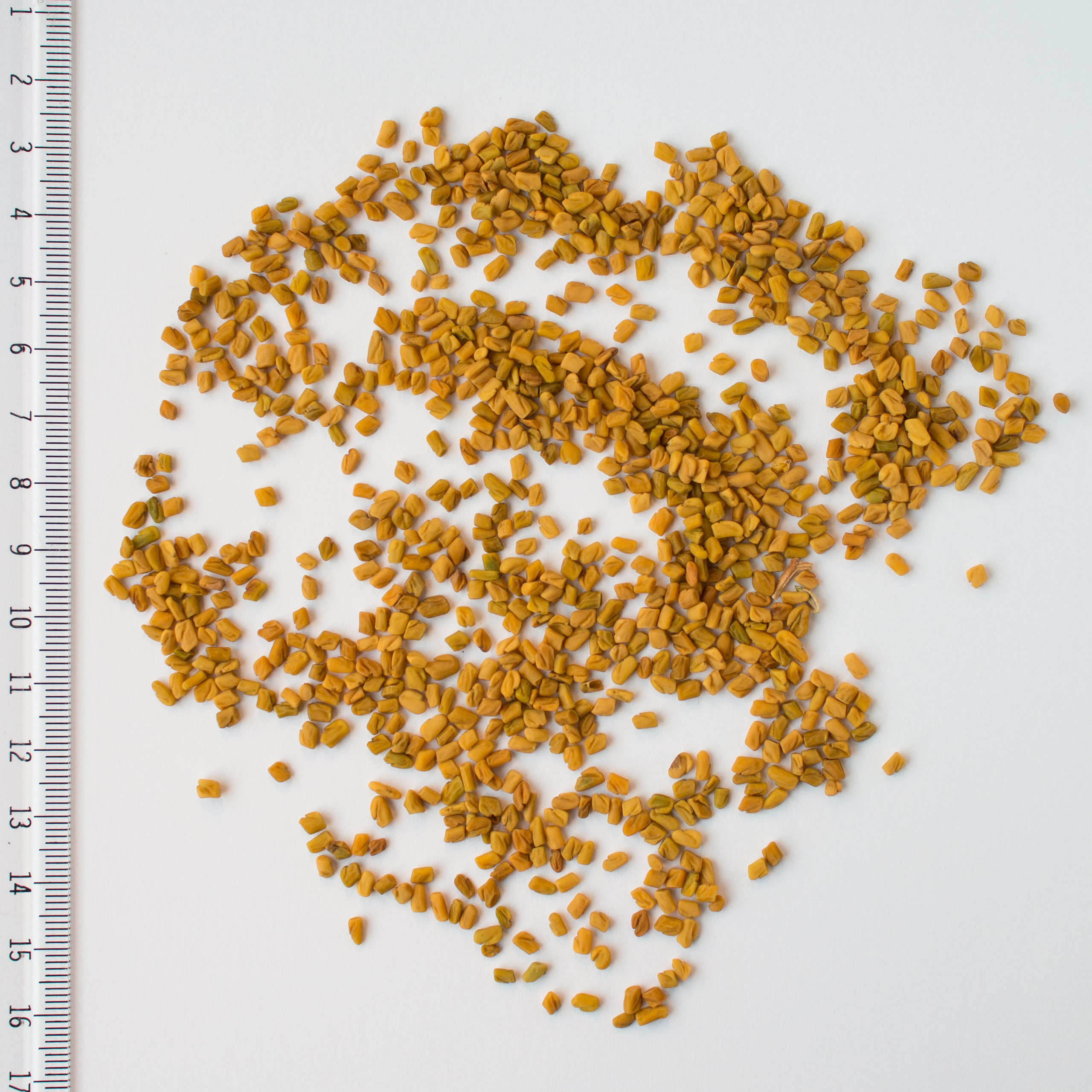
Methi is a familiar leafy green that is seen at the shop of every vegetable seller and carts in India. It is found in almost every household serving many needs of the people.
Methi, Fenugreek by name in English speaking countries, has been baptized as Trigonella foenum-graecum in taxonomy. Fenugreek entered in English vocabulary from Latin term faenugraecum meaning ‘Greek hay”. Its history is fascinating whose seed have been found from the tomb of Tutankhamun.
I have developed a keen likening for vegetable growing and flower cultivating trying to grow Methi in pots and fields that proved hilarious and rewarding.
Cuboid, yellow to amber colored methi ka daana are frequently used in the cuisines of Bharat, Pakistan & Bangladesh as whole and powder in pickles, vegetable dishes, dal and spice mixes – panch phoron and sambar powder. They are often roasted to reduce bitterness and to enhance its flavor.
Plants of methi are fast growing whose fresh leaves we can harvest within 3-4 weeks. They grow well in containers, pots, or small garden patches achieving duel purposes leaves and seeds. It is rich in vitamins, minerals, and fiber; known to aid digestion. We can use the same fenugreek seeds we buy for cooking from a grocery store or Indian market, as long as they are plain and not roasted or treated.
As regards its common problems and their solutions, methi is relatively pest free but we must eye out for leggy seedlings caused by insufficient light moving to a sunnier location. Their yellowing leaves often a sign of overwatering be dried out a bit more between watering. Powdery mildew is white powdery fungus on leaves. It is caused by poor air circulation and humidity, avoiding wetting the leaves when watering. You can spray with a mixture of 1tsp baking soda in 1 quarter of water. (Hamid Siddiqui)


Leave a Reply